


Products Description
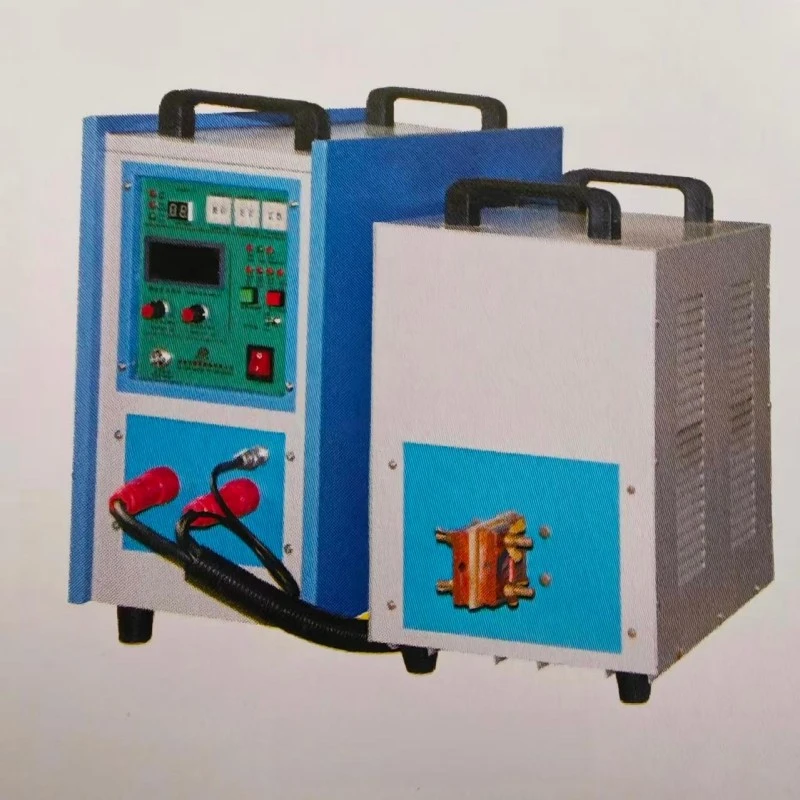
Induction Heat Treat Equipment utilizes electromagnetic induction to generate heat directly within conductive workpieces, offering a clean, efficient, and highly controllable heating method for a wide range of metal treatment applications. By inducing eddy currents through a high-frequency alternating magnetic field, the system achieves rapid, localized heating without direct flame or contact, resulting in superior metallurgical outcomes, minimal oxidation, and reduced energy consumption.
The equipment series covers power ratings from 15 kW to over 200 kW, with frequency ranges from 1 kHz to 400 kHz, accommodating diverse applications including surface hardening (quenching), annealing, tempering, normalizing, brazing, forging, and shrink-fit assembly across automotive, aerospace, wind power, construction machinery, and general manufacturing industries.

Key Features

1. Advanced Solid-State Power Technology
Modern induction heating systems utilize IGBT (Insulated Gate Bipolar Transistor) or MOSFET power devices, delivering up to 95%–98% conversion efficiency-significantly outperforming older vacuum tube technology which wastes 70% or more of input energy. The inverter-based design eliminates the need for bulky transformer components, reducing equipment footprint while ensuring stable, repeatable power output under varying load conditions.
2. Precision Digital Control
DSP / FPGA Control Architecture: High-speed digital signal processing enables millisecond-level dynamic response and precise closed-loop regulation of heating temperature, power, and case depth
Multi-Stage Programmable Output: Users can program preheat, heating, hold, and cooling stages with independent power and time settings, ensuring repeatable results across production batches
Automatic Load Matching: The system automatically adapts to different induction coil configurations and workpiece geometries without manual tuning, streamlining changeover for mixed production
3. Comprehensive Protection & Monitoring
Built-in safeguards include short circuit, overload, overvoltage, overtemperature, phase loss, and water/air pressure alarms. Real-time parameter monitoring (current, voltage, frequency, temperature) with fault diagnosis and logging supports traceability and predictive maintenance.

4. Flexible Frequency & Power Configurations
|
Frequency Range |
Typical Applications |
|
1–30 kHz (Medium Frequency) |
Through-heating, forging, thick-section annealing, deep case hardening |
|
25–35 kHz (Super-Audio) |
General heat treatment, shaft hardening, gear teeth |
|
30–100 kHz (High Frequency) |
Surface hardening, small parts, brazing, shallow case depth |
|
100–400 kHz (Ultra-High Frequency) |
Thin-layer hardening, micro-components, precise localized heating |

5. Compact & Modular Design
Air-Cooled and Water-Cooled Options: Smaller units (15–40 kW) often utilize air cooling or minimal water requirements, while higher-power systems integrate forced water circulation for 24/7 continuous duty.
Portable Configurations: Benchtop or wheel-mounted units enable on-site heat treatment, weld preheating, and post-weld heat treatment (PWHT) at job sites.
Quick-Change Coils: Interchangeable induction coils with rapid connectors support fast tooling changes for multi-product flexibility.
6. Integrated Workstation Options
For automated production, the induction power supply can be paired with specialized quenching machine tools:
Vertical Quenching Machines: For shafts, axles, and cylindrical parts with continuous or segmental scanning
Multi-Station Systems: Simultaneous hardening of multiple parts (e.g., crankshaft journals) for high throughput
Rotary/Indexing Tables: For high-volume batch processing of small components
CNC Integration: Siemens or industrial PC-based controls with "one-button" automatic operation and recipe storage
Process Applications
1. Hardening (Quenching & Tempering)
Surface hardening of gears, shafts, camshafts, crankshafts, bearing races, chain links, and track components. Induction hardening delivers precise case depth control with minimal distortion, extending component fatigue life and wear resistance.
2. Annealing & Normalizing
Stress-relief annealing, softening for cold forming, and normalization of castings or forgings to refine grain structure and improve machinability.
3. Brazing & Soldering
Joining dissimilar metals (carbide tips to steel tools, copper to brass, etc.) with localized heating that preserves surrounding material properties. Applications include saw blades, drill bits, cutting tools, and plumbing fittings.
4. Forging & Hot Forming
Pre-heating billets, bars, and fasteners for hot forging, upsetting, and extrusion. Induction heating minimizes oxidation (scale) and ensures uniform core temperature for consistent forming quality.
5. Post-Weld Heat Treatment (PWHT) & Preheating
Localized stress-relief heating of welded joints in pipelines, pressure vessels, and structural steel to prevent hydrogen-induced cracking. Portable induction systems enable on-site PWHT without large ovens or torch heating.
6. Shrink-Fit Assembly
Expanding rings, bearings, gears, and couplings for interference-fit assembly, followed by controlled cooling for secure mechanical locking.

Hot Tags: induction heat treat equipment, China induction heat treat equipment manufacturers, suppliers, factory