
Resistance welding transformers are welding equipment used with AC power supplies rated at 50-60Hz and below 1000V. They feature high welding efficiency, fast speed, strong welds, and reduced welding costs. Primarily used in spot welding machines, seam welding machines, and butt welding machines, they are particularly suitable for materials with high thermal conductivity or poor weldability, such as aluminum alloys and aluminum. In welding galvanized sheets and multi-layer plates, they offer significantly better quality than power frequency welding machines. The core is made of cold-rolled, high-quality grain-oriented silicon steel sheets, with 1-2 turns in the winding. The insulation heat resistance class is F, the impedance is below 10⁻³Ω, and it supports 4-12 levels of current regulation.
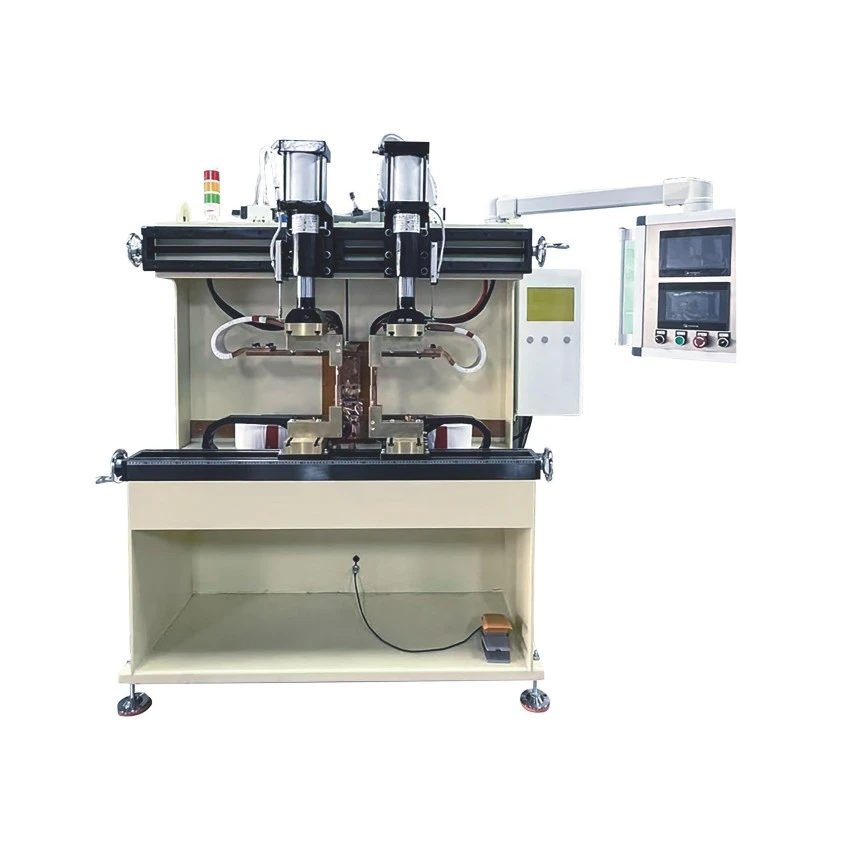
The secondary side operating current range of this transformer is 2000~40000A. It is available in two voltage types: fixed (≤10V) and suspended (≈24V). The capacity exceeds 50kVA, and power regulation is achieved by changing the number of turns in the primary winding. The core employs a core-type structure design, coupled with natural or water cooling systems, to meet varying power requirements. It operates under intermittent power supply and no no-load conditions (except for flash butt welding). Environmental requirements include an altitude not exceeding 2000 meters, temperature ≤40℃, humidity ≤90%, and absence of severe vibration and corrosive gases.