
Resistance Wire Welding Machines for Wire and Metal Assemblies
High-precision resistance wire welding systems engineered for stable electrical continuity and mechanical joint strength across wire and metal component assemblies.



Category Introduction
Wire connection integrity directly influences the electrical performance and mechanical durability of industrial assemblies. Resistance wire welding utilizes localized electrical resistance heating and applied electrode force to join wire-to-wire, wire-to-terminal, or wire-to-sheet metal configurations without filler materials. Equipment selection depends on wire diameter, strand count, thermal and electrical conductivity, melting points, and required tensile pull-out thresholds. Precise closed-loop control over welding current, pulse timing, and clamping force prevents conductor crushing, surface burning, or insufficient interface fusion.
Welding Methods
End-to-End Butt Welding:
Aligns and joins wire ends along the same axis using upset pressure and localized resistance current for continuous coil feeding or strand repair.
Cross-Wire Welding:
Concentrates current at intersecting or perpendicular wire contact points to create solid weld nuggets in wire mesh, grids, and cage structures.
Parallel Lap Welding:
Fuses multi-strand wires, braided copper shunts, or fine litz wire directly onto flat busbars, contact tabs, or sheet metal terminals under controlled force distribution.
Terminal Crimp-Assisted Resistance Welding:
Combines mechanical crimping with subsequent resistance fusion to eliminate contact resistance and resist high mechanical vibration in automotive and power distribution leads.
Machine Types
Wire Butt Welding Machines:
Compact units built for axial butt joining of steel, copper, brass, and alloy wires before drawing or assembly operations.
Multi-Strand & Braided Wire Welders:
Heavy-duty machines equipped with wide, contoured electrodes to consolidate loose wire strands into solid terminal ends without fraying.
Fine Wire Micro Welders:
Precision power source units (Inverter DC or Capacitor Discharge) delivering short-duration, low-thermal-impact energy pulses for delicate instrument and electronic lead wires.
Cross-Wire Grid Welding Stations:
Multi-electrode and pneumatic indexing machines designed to execute multiple wire intersection welds simultaneously in structural frames.
Copper Braided Shunts and Ground Straps:
Flexible conductive assemblies used in power distribution cabinets, battery packs, and heavy machinery.
Heating Element Assemblies:
Nickel-chromium (NiCr) and iron-chromium-aluminum (FeCrAl) resistance wires joined to electrical connection pins in industrial heaters and appliances.
Automotive Harnesses and Power Terminals:
Heavy-gauge copper and aluminum conductors connected to power terminals subject to thermal cycling and physical strain.
Sensor and Instrument Lead Connections:
Thermocouple wires and sensor leads joined to contact pins with low heat input to preserve physical material properties.
Wire Mesh and Frame Assemblies:
Appliance interior racks, filter support grids, and industrial wire baskets requiring rigid joint alignment.
Wire Gauge and Cross-Sectional Area: Defines required secondary transformer kVA rating, current output range, and electrode pressure requirements.
Strand Count and Geometry: Multi-strand and braided wire configurations require specialized electrode contours to ensure uniform current distribution across all individual filaments.
Material Pairings: Joining dissimilar metals (such as copper to nickel or brass to steel) requires programmable multi-stage current pulses to balance differing electrical and thermal conductivities.
Surface Condition and Coatings: Oxide layers, plating, or enamel insulation dictate required force profiles, pre-pulse heating cycles, or mechanical stripping requirements.
Joint Performance Targets: Specified tensile pull-out force thresholds, maximum micro-ohm voltage drop limits, and weld nugget size govern machine control precision.
Customization Options
Wire Alignment and Positioning Fixtures: V-groove clamping blocks, ceramic wire guides, and self-centering mechanical jaws to maintain geometric concentricity during welding.
Clamping and Force Control Systems: Pneumatic or servo-actuated press heads providing programmable force profiles tailored to soft copper or brittle wire alloys.
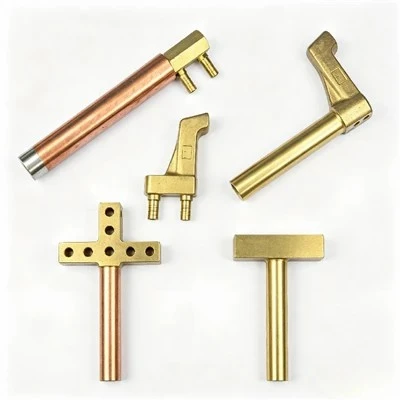
Electrode Alloys and Profiles: Custom-machined electrode tips made from Chromium Zirconium Copper (CuCrZr) or Tungsten-Copper (WCu) with custom radii or grooves matching specific wire shapes.
Automation and Part Handling: Integrated linear indexing slides, rotary tables, and robotic end-effector interfaces for high-volume automated assembly.
In-Line Quality Monitoring: Weld controllers tracking dynamic resistance curves, current displacement, and voltage drop during each welding cycle to detect non-conforming joints instantly.
FAQ

Submit Wire Specifications and Samples for Process Evaluation
Send wire technical drawings, material datasheets, sample photos, target hourly output, and quality requirements to receive a technical feasibility evaluation and custom equipment configuration.
[Request Technical Evaluation and Process Proposal]
We are one of the most experienced resistance wire welding machines manufacturers and suppliers in China. With a professional production team, we offer a wide range of products with superior quality. Please feel free to buy customized resistance wire welding machines at competitive price from our factory.
heavy duty spot welder, pro spot welding machine, resistance welder auto body