
Resistance Butt Welding Machines for Metal Joining
High-precision resistance welding systems engineered for solid-state continuous end-to-end joining of rods, wires, tubes, and metal profiles.



Category Introduction
Resistance butt welding is a solid-state thermal-mechanical joining process used to connect metal components end-to-end without filler material. Clamped workpieces are aligned under axial force while low-voltage, high-amperage current passes through the abutting interface. The resulting contact resistance generates localized heat, plasticizing the material before an axial upset stroke forges the joint. This process is applied to continuous production lines processing circular bars, wire stock, flat strips, and structural profiles where tensile strength must match the base metal. Equipment selection depends directly on the workpiece cross-sectional area, material electrical and thermal conductivity, and required upset force capacity.
How Resistance Butt Welding Works
The welding cycle relies on coordinated electrical energy delivery and mechanical force application:
Clamping and Alignment:
Workpiece ends are securely gripped in copper alloy electrode jaws, aligning the interface and preventing lateral displacement under load.
Current Termination and Holding:
Current shuts off while clamping and forging pressure are maintained to stabilize the grain structure during cooling before release.
Current Concentration:
Electrical current flows through the abutting faces. Because interface contact resistance is significantly higher than the bulk metal, thermal energy concentrates precisely at the joint boundary, rapidly elevating the interface temperature.
Upsetting and Forging:
Once the material reaches the forging plastic range, axial pressure drives the ends together. This mechanical displacement expels molten oxides, impurities, and excess material, forming a refined metallurgical bond.
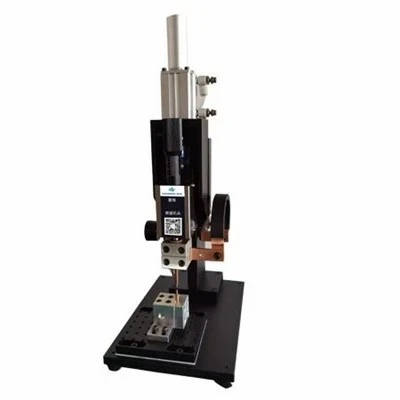
AC Resistance Butt Welders: Powered by standard alternating current transformers, designed for standard carbon steel wire and rod joining with stable energy output.
Medium Frequency Inverter (MFDC) Butt Welders: Utilize high-frequency inverter regulation to deliver precise energy control, shorter weld cycles, and balanced three-phase electrical loads, suitable for aluminum, copper alloys, and alloy steels.
Pneumatic Clamping Butt Welders: Employ pneumatic cylinders for rapid, repeatable workpiece gripping and stable clamping force across high-frequency production shifts.
Servo-Controlled Butt Welders: Integrate high-precision servo motors and linear encoders to control displacement, velocity, and upset distance with strict dimensional repeatability.
Heavy-Duty Bar and Profile Welders: Built with rigid cast frames and hydraulic clamping mechanisms to process large cross-sectional areas of structural steel bars and heavy industrial profiles.
Applications
Wire and Rod Drawing Lines:
Continuous coil joining for steel, copper, and brass wire processing.
01
Automotive Components:
Solid-state joining of ring blanks, tubular structural assemblies, and steering components.
02
Tool Fabrication:
Fusing high-speed steel cutting heads to carbon steel shanks for drills, reamers, and continuous band saw blades.
03
Hardware and Industrial Hoops:
Producing closed-loop metal rings, handles, and structural wire frames.
04
Key Selection Factors
Cross-Sectional Area:
Measured in square millimeters ($mm^2$), determining the required transformer kVA rating and secondary output current.
01
Material Properties:
Electrical conductivity, thermal resistivity, and plastic deformation range dictate energy input rates and required forging force profiles.
02
End-Face Condition:
Flatness, squareness, and surface cleanliness prior to clamping influence contact resistance uniformity.
03
Clamping and Upset Force:
Mechanical force capacities required to lock the workpiece securely and deliver sufficient forging pressure without slippage.
04
Joint Integrity Requirements:
Target tensile strength, fatigue limits, and post-weld flash removal tolerances.
05
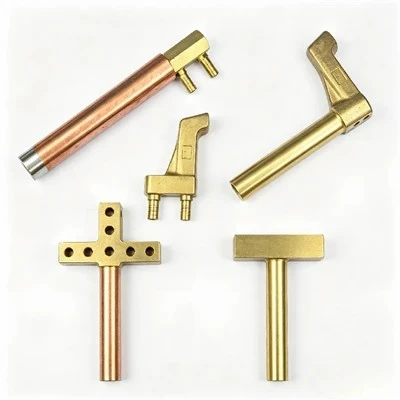
Electrode Jaws: Custom-machined copper alloy jaw profiles matched to specific rod diameters, tube sizes, and geometric sections.
Clamping Mechanisms: Pneumatic, hydraulic, or toggle configurations engineered for specific gripping loads.
Displacement Control: Integrated linear encoders and digital monitors for exact real-time upset stroke measurement.
Material Handling Integration: Manual slide fixtures, pneumatic alignment guides, or automated loading interfaces.
Flash Removal Systems: Integrated trimming blades, broaching tools, or grinding attachments to remove exterior weld burrs immediately following the upset cycle.
FAQ

Discuss Your Metal Butt Welding Requirements
Submit your workpiece drawings, material specifications, sample photos, target production capacity, and mechanical performance requirements to receive a detailed technical configuration.
[ Request Technical Proposal ]
We are one of the most experienced resistance butt welding machines manufacturers and suppliers in China. With a professional production team, we offer a wide range of products with superior quality. Please feel free to buy customized resistance butt welding machines at competitive price from our factory.
accurate spot welding machine, automatic battery spot welding machine, stationary spot welding machine