


Products Description
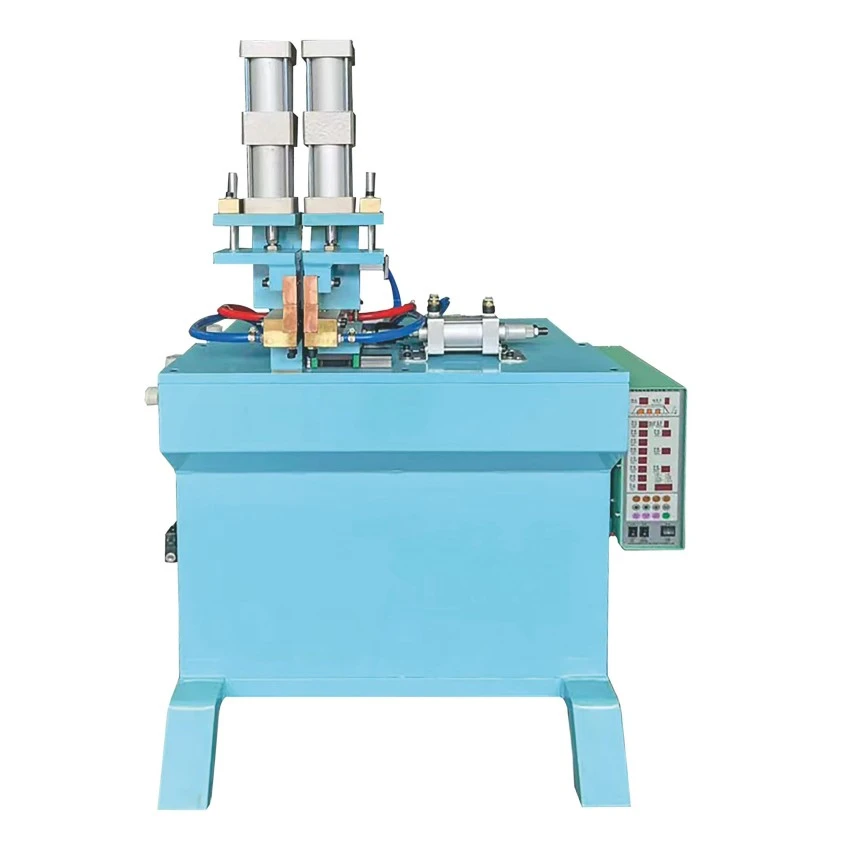
A line welding machine is a broad equipment category covering multiple welding technologies, with the core function of achieving high-quality connections between wires and wires, or wires and terminals. It is widely used in automotive wiring harnesses, new energy battery connecting wires, electronic communication products, wire and cable processing, and more.
The concept of "line welding" can be understood from two dimensions: first, the workpiece being welded is a wire (wire harness, conductor, braided wire, etc.); second, the welding path is a straight line (continuous seam welding). This article covers three major technology routes-resistance welding, ultrasonic welding, and laser welding-to help you select the right equipment based on your process requirements.

Key Selling Points

Resistance Wire Welder - The Cost-Effective Choice
Core technology is MFDC resistance welding with IGBT inverter for high-precision current control and fast response. Weld times in milliseconds, no flux or shielding gas required. Joints are fused into a single alloy layer with stable chemical properties and excellent conductivity. Spatter-free, bright weld spots, no copper exposure - ideal for copper alloy terminals to single/multi-strand copper wires.
Ultrasonic Wire Harness Welder - Standard for New Energy
High-frequency ultrasonic vibration (typically 20kHz) removes surface oxides for solid-state bonding. No solder, no flux - minimal heat input, ideal for aluminum wire and Cu-Al dissimilar welding. High-power models handle up to 120mm² cross-section harnesses - the go-to choice for battery packs and motor lead welding.
Laser Line Welder - Flexible and Precise
Handheld design with total weight under 35kg, suitable for prototyping, retrofitting, and small-batch production. Laser power up to 4000W, clamping force up to 3KN - fast welding, low distortion, uniform seams.
Automation-Ready - High Efficiency
Resistance wire welders can integrate automatic feeding and cutting systems for full automation - from wire feeding to finished product cutting. One operator can monitor multiple machines. PLC control with HMI for intuitive operation and real-time status monitoring.
Stable Quality - Minimal Post-Processing
All line welding processes require no filler material, producing strong, aesthetic joints. Resistance welding - spatter-free; ultrasonic welding - no thermal distortion or oxidation; laser welding - smooth, uniform seams. Little to no post-processing required.

FAQ
Q: What's the difference between a line welding machine and a standard spot welder?
A: Standard spot welders are primarily for spot welding sheet metal. Line welding machines are specially designed for wire-shaped workpieces - wire harnesses, conductors, terminals - with structural and control features optimized for wire processing applications.
Q: Resistance wire welder or ultrasonic wire harness welder - which to choose?
A: Resistance welders are lower cost and have mature processes - ideal for standard copper harness and terminal welding. Ultrasonic welders are suited for large-section harnesses (up to 120mm²), Cu-Al dissimilar welding, and heat-sensitive applications - no solder, strong joints.
Q: Can a line welding machine weld enameled wire?
A: Yes. MFDC resistance welding delivers short, concentrated energy pulses, enabling direct welding of enameled wire to terminals or to other enameled wires without pre-stripping the insulation.
Q: Does the equipment support automated production?
A: Yes. Resistance wire welders can be configured with automatic feeding and cutting systems for fully automated operation - PLC controlled, one operator can monitor multiple machines.
Q: Is post-processing required after welding?
A: Generally no. Resistance welding is spatter-free with bright weld spots; ultrasonic welding produces no oxidation or thermal distortion; laser welding delivers smooth, uniform seams. Little to no post-processing required.
Hot Tags: line welding machine, China line welding machine manufacturers, suppliers, factory, beam welding line machine, Car Spot Welding Machine, cnc spot welding machine, dot welding machine, projection spot welding, weld nut welder